Draft Declaration on the African Union Conference on Debt.
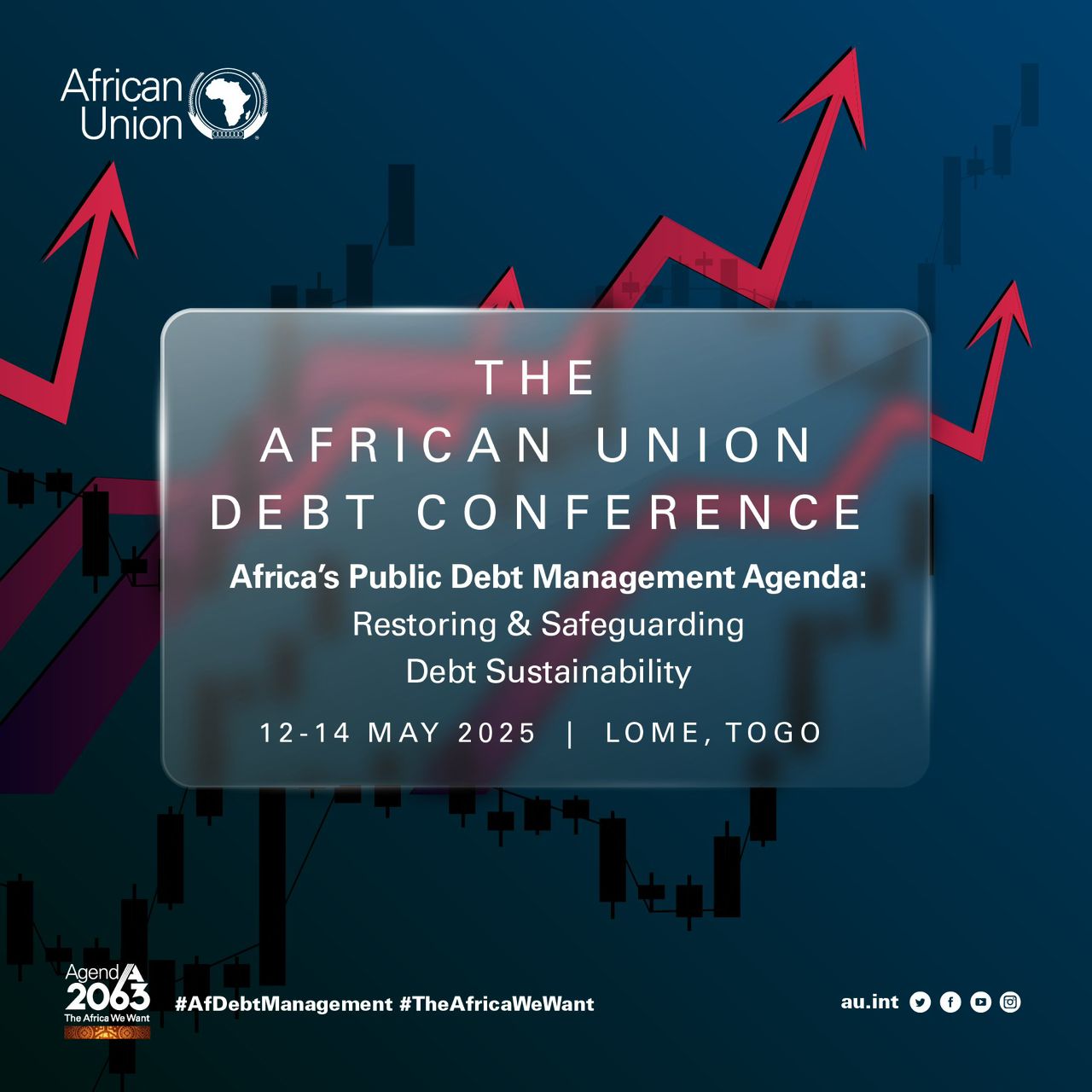
WE, the African Union (“AU”) Heads of State and Government, Ministers of Finance,
Central Bank Governors, representatives of the Ministries of Finance, African Multilateral
Financial Institutions, Regional Economic Communities and Civil Society Organisations,
meeting from 12th to 14th May 2025, for the African Union Conference on Debt in Lome,
Republic of Togo;
HAVING deliberated on the theme of “Africa’s Public Debt Management Agenda:
Restoring and Safeguarding Debt Sustainability”;
ACKNOWLEDGING that public debt in Africa has increased significantly over the last
decade, resulting in over 25 countries being either at high risk of debt distress or in debt
distress, which has created a huge challenge as the rising debt service costs are draining
vital public resources needed for development and achievement of the Sustainable
Development Goals (“SDGs”) and the AU Agenda 2063;
RECOGNISING that besides the heightened debt service payments, the continent has
an enormous development financing gap, averaging USD200 billion per annum, for
successful attainment of the SDGs by 2030;
COGNISANT that the prevailing debt situation suggests a daunting task ahead of the
continent, partly due to the increased complexities in debt restructuring owing to a wide
variety of creditors, as well as the growing complexity in bridging the financing gap due
to reduced development financing flows to the continent;
STRESSING that the challenge at hand calls for interventions that will firstly resolve the
current debt crises to free up resources to be directed towards the acceleration of the
social and economic transformation needed for the attainment of the SDGs and
Agenda 2063, and secondly ensure that the heightened financing needs are financed
while safeguarding debt sustainability;
RECALLING that despite the continent having benefitted from various debt relief
initiatives previously developed and deployed by the international community, the
continent keeps on sliding back into high indebtedness episodes;
NOTING WITH CONCERN that while the continent welcomed the G20 Common
Framework as a first step towards a more comprehensive approach to the sovereign debt
restructuring on the continent and beyond, it has not provided a pathway towards the
quick restoration of debt sustainability, creating some considerable scepticism as to its
potential to deliver effectively for highly indebted countries, particularly in Africa;
COMMENDING that the African Union Commission (“AUC”) develops an African
Common Position on debt to provide guiding principles to the AU Member States in their
debt management by spelling out both an effective debt resolution mechanism as well as the common debt management principles to enable the continent to mobilise
concessional resources at scale to implement the AU Agenda 2063 while safeguarding
debt sustainability.
HEREBY:
ON MEASURES TO RESOLVE THE CURRENT DEBT CHALLENGES
1. REAFFIRM our determination to implement at the national, continental and global
levels all measures likely to contribute to an effective solution to the current debt
problem and express our commitment to examining and implementing, as appropriate,
supporting measures as may be dictated by the growing burden of Africa’s external
debt and the demands for economic recovery and accelerated development as set out
in Agenda 2063;
2. CALL UPON the AUC to leverage its full membership status to the G20 to project a
strong and unified African voice on the international stage, with a view to reforming
the global financial architecture, particularly reforming the G20 Common Framework
to ensure that it delivers adequate and timely debt relief necessary for restoring and
safeguarding debt sustainability;
3. RESOLVE to advocate for reforming the G20 Common Framework by setting up a
universally accepted methodology for comparability of treatment, enhancing
transparency and inclusivity amongst stakeholders during restructuring, pursuing
simultaneous and coordinated negotiations across creditor types, introducing a timebound aspect, suspending debt servicing for all borrower countries embarking on a
debt restructuring, expediting the ongoing reforms to the Low Income Country-Debt
Sustainability Framework (“LIC-DSF”), accommodating debt swaps for climate and
nature, expanding its eligibility criteria to include the middle-income countries, and
establishing a supranational legal mechanism for enforcement purposes, among other
proposed reforms;
4. FURTHER RESOLVE to continue with advocacy at the G20 for expeditious
implementation of the making of the Multilateral Development Banks Better, Bigger,
and More Effective Agenda by rechannelling of the Special Drawing Rights (“SDRs”)
through the Multilateral Development Banks as a means for scaling up the muchneeded concessional liquidity to African countries to refinance some of the expensive
loans on our debt portfolios;
5. AFFIRM that we will strongly advocate for debt forgiveness on a case-by-case basis,
based on the inability of some African countries to service their debt, on the principle
of economic justice, the principle of necessity, and on principles of international law
such as force majeure, and the omnia conventio intelligitur rebus sic stantibu, whereby
a fundamental change of circumstances can affect the validity of a treaty/financing
agreement;
6. COMMIT to adopt a Common African position on debt under the aegis of the African
Union to form as a negotiation strategy and a united front before creditors and other
stakeholders during negotiations and discussions on our continental debt forgiveness,
debt restructuring, and other continental debt financing engagements;
7. RESOLVE to go beyond the G20 Common Framework and other debt relief
mechanisms by utilising, where appropriate, other debt burden-reducing options such
as debt swaps (Debt-for-Nature swaps and Debt-for-Development swaps), as well as
utilising cheap innovative financing instruments such as Panda bonds;
8. SEEK to promote inclusive growth and sustainable development of the African
economy, anchored in 7-10% annual growth rates, by accelerating productive
transformation through leveraging the key strategic policy actions adopted under the
strategic framework on key actions to achieving inclusive growth and sustainable
development in Africa;
9. AIM to harmonise regional macroeconomic policies to enhance resilience, by
deepening economic integration and promoting the convergence of policy
frameworks;
10.COMMIT to establishing monetary and fiscal stability frameworks aligned with
development priorities, by promoting responsible policies, sound debt management,
and monetary stability in support of growth.
ON MEASURES TO BE IMPLEMENTED IN MOBILISING NEW FINANCING WHILE
SAFEGUARDING DEBT SUSTAINABILITY
11.REAFFIRM our commitment to further implementing measures at national, continental
and global levels to ensure that the continent mobilises adequate concessional
financing for the implementation of the continent’s social and economic transformation
without jeopardising debt sustainability;
12.REITERATE our commitment to utilising other financing models besides debt
financing in the implementation of our transformation agenda through financing
options such as the Public Private Partnerships (“PPPs”) and carbon trading, with the
sole purpose of improving the region’s overall fiscal position and safely guiding debt
sustainability;
13.COMMIT to employing innovative financing instruments such as sustainability
financing instruments, panda bonds, etc., which have been employed in other regions
of the world to mobilise financing at reduced cost and risk;
14.RESOLVE to expedite the establishment of the African Financing Stability Mechanism
(“ASFM”) to protect our countries against shocks and to provide liquidity support in the
form of concessional loans and other forms of rescue packages to African countries
facing high debt refinancing risks;
15.FURTHER RESOLVE to expedite the ongoing establishment of the African Credit
Rating Agency to develop more permanent solutions towards supporting Africa’s
access to affordable capital, which is currently highly priced because of the high-risk
premium placed on the African countries by international credit risk rating agencies;
16.CALL UPON the IMF to urgently reform the Special Drawing Rights (“SDR”) allocation
formula by incorporating countries’ liquidity needs beyond IMF quotas which should
be able to scale up the allocation to the African countries from the below 5% of the
total SDRs allocation during the last SDR allocation in 2021;
17.CALL ON the international organisations to acknowledge the obsolescence of current
debt analysis and management tools, which constrain and hinder essential
investments in human capital, critical infrastructure, and resilience to global
challenges as well as urge a shift toward political and strategic pragmatism, rather
than counterproductive technical automatism;
18.FURTHER CALL UPON developed countries to fulfil their pledges on an increased
allocation to both the IMF’s Poverty Reduction and Growth Trust (“PRGT”) and the
Resilience and Sustainability Trust (“RST”);
19.RESOLVE to enhance Domestic Revenue Mobilisation through the adaptation of
appropriate policies and measures such as the improvement of the efficiency of
existing tax systems, the optimisation of tax incentives, the rationalisation of tax
exemptions, the expansion of the tax base, the implementation of specialised taxes,
the establishment of solid domestic institutions and policy frameworks, and fighting
the illicit financial flows;
20.SEEK to promote inclusive growth and sustainable development of the African
economy, anchored in 7-10% annual growth rates and sustained over a period of 40
to 50 years by accelerating productive transformation, leveraging the key strategic
policy actions adopted under the strategic framework on key actions to achieving
inclusive growth and sustainable development in Africa;
21.URGE the developed countries and the Multilateral Development Banks (“MDBs”) to
recognise the importance of concessional financing and other forms of capital inflows
in addressing the African external debt problem and take action to reverse the decline
and grow the net capital inflows to several African countries, substantially reduce the
lending interest rates on existing and future loans;
22.FURTHER URGE Africa’s partners to invest in peace, stability, and the fight against
transnational threats, as Africa’s security is both a necessity and a global public good
that deserves concrete recognition and support;
23.URGE that security, health, and climate expenditures be better accounted for — by
recognising the cost of inaction and excluding such investments from debt
sustainability analyses (“DSAs”)—in order not to penalise countries that prioritise the
resilience and stability of their societies and economies;
24.RESOLVE to urgently engage and agree with global creditors on how to hedge
against exchange rate risk, such that where a debt burden increases because of the
appreciation of the creditor countries’ currencies (exchange rate volatility) through no
fault of the borrowers, the increased debt burden resulting from exchange rate risk
should be treated as debt relief, to control erratic growth of the borrowers’ debt burden;
25.URGE developed countries to fulfil their commitment to allocating 0.7% of their Gross
National Income (“GNI”) to Official Development Assistance (“ODA”), a long-standing
target set by the United Nations with a view to reducing debt financing;
26.CALL UPON the World Bank to both raise the International Development Association
(“IDA”) concessional financing eligibility ceiling from the current $1,205 per capita to
enable more African countries (currently 39) to qualify for IDA resources and expand
the eligibility criteria by going beyond the country’s income level and creditworthiness
by incorporating other country-specific factors;
27.FURTHER CALL UPON the MDBs to cease the practice of immediate
commencement of lending on blend terms when a country graduates to the blend
category. African countries graduating in the blend category GDP per capita should
continue accessing IDA financing at least for a considerate period before being
introduced to the blend financing terms.
ON DEBT RESTRUCTURING
28.COMMIT to employing the ex-ante debt reprofiling (pre-emptive re-profiling) approach
to allow borrower countries to improve on their liquidity and the solvency debt burden
indicators in a timely manner before they are in debt distress, as a way of avoiding
damaging consequences to those debt-distressed economies undergoing debt
restructuring;
29.FURTHER COMMIT to seeking and commencing external debt restructuring
processes early enough, for countries already in debt distress, for better and timely
debt restructuring outcomes and fewer economic disruptions;
30.URGE borrower member states, creditors and the international financial institutions to
only settle for debt restructuring options that consider countries’ development and
investment needs, repayment capacity, expected growth in export earnings, import
requirements, expected financial inflows, climate shocks, and budgetary situations,
among other country-specific factors;
31.REITERATE that within the framework of debt restructuring (i.e. the G20 Common
Framework), individual creditor countries which are members of the Bilateral Creditors
should be allowed to negotiate and grant better rescheduling terms to African debtor
countries than those obtainable within the restructuring framework (creditor countries
should be allowed to provide additional relief beyond the comparability of treatment
benchmarks provided);
32.RESOLVE to make previously restructured debts generally eligible for further
restructuring to ease the debt servicing burden of the debtor; alternatively, adjustment
clauses should not only work in favour of creditors but borrower countries too, allowing
much favourable debt servicing terms in case of any negative shock to borrower
economy;
33.FURTHER RESOLVE to take action to expedite bilateral negotiations between the
borrower country and its bilateral creditors (following the signing of a Memorandum of
Understanding [“MoU”] between the Official Creditors Committees);
34.CALL FOR global emergency financing to benefit African countries, and for the
implementation of the rechannelling of SDRs to regional multilateral financial
institutions, with the African Development Bank (“AfDB”) as the designated holder, as
a viable option to help alleviate Africa’s debt challenges;
35.FURTHER CALL FOR accelerating reforms related to the capital adequacy of MDBs
to enable more concessional financing in order to meet Africa’s development
challenges.
ON SOUND DEBT MANAGEMENT PRACTICES
36.COMMIT to ensuring that grant and concessional resources are used productively by
improving public financial management, including effective resource allocation and
budgeting, strong fiduciary oversight on spending, and appropriate audit institutions
and procedures;
37.ALSO COMMIT to establishing and enforcing laws that require parliamentary approval
for debt contraction and comprehensive reporting on debt utilisation with a view to
strengthening transparency and accountability;
38.CALL UPON subregional and regional organisations, in particular the, African
Development Bank (“AfDB”), the Economic Commission for Africa (“ECA”), The
African capacity Building Foundation (“ACBF”), the Macroeconomic and Financial
Management Institute of Eastern and Southern Africa (“MEFMI”), the West African
Institute for Financial and Economic Management (“WAIFEM”) and other debt
management capacity building regional institutions, in collaboration with United
Nations Conference on Trade and Development (“UNCTAD”), the international
Monetary Fund (“IMF”) and the World Bank to rump up their debt management training
to African countries including to parliamentarians;
39.URGE the AfDB and its partners to continue their ongoing initiatives to strengthen
debt management capacity, particularly the Debt Management Forum for Africa
(“DeMFA”) and the African Debt Managers Initiative Network (“ADMIN”), in order to
promote sustained policy dialogue, peer learning, and knowledge exchange on African
debt management;
40.COMMIT to urgently strengthening and operationalising the debt management legal
and institutional frameworks in the member states by integrating strong sanctions into
the legal frameworks for those circumventing public debt regulations, providing for the
definition of public debt as recommended by the World Bank and the IMF, providing
for the purpose of borrowing, providing for debt limits, and providing for full
reporting/disclosure of information;
41.ALSO COMMIT to accelerating the establishment of the African Union Financial
Institutions with the African Monetary Institute (“AMI”) and the African Financing
Stability Mechanism (“AFSM”) as the first steps to strengthen Africa’s financial stability
in a world vulnerable to shocks; The AFSM will specifically address the continent’s
high refinancing needs and enable countries to pool their resources, helping to
mitigate the impacts of global pandemics or other external shocks;
42.CALL UPON Member States to enhance the identification of all exposures and risks
to public debt in our respective member states which require us to continue monitoring
our debt portfolios through timely undertaking of Debt Sustainability Analyses
(“DSAs”), Medium-Term Debt Strategies (“MTDSs”) and Annual Borrowing Plans
(“ABP”);
43.REITERATE our position to abide by relevant milestone guidelines in external debt
management, including the UNCTAD Principles on Promoting Responsible Sovereign
Borrowing and Lending (2012), the Addis Ababa Action Agenda (2015), General
Assembly resolution 69/319, the G20 Operational Guidelines for Sustainable
Financing (2017) and the IMF-World Bank Group multipronged approach to
addressing debt vulnerabilities (2018);
TOWARDS A LEGALLY BINDING MECHANISM FOR DEBT RESOLUTION
44.CALL UPON the AU and other pan-African Institutions to advocate for strong, farreaching reform of global debt architecture through the establishment of a UN
Framework Convention on Sovereign Debt. This proposed framework should aim
to create a more comprehensive, fair, and effective multilateral mechanism for
preventing and resolving sovereign debt crises. The Framework Convention on
Sovereign Debt should be a legally binding mechanism providing timely and adequate
debt relief. It should furthermore be inclusive and transparent, propose developmentoriented debt sustainability assessments, address illegitimate debt and propose debt
crisis prevention mechanisms.
FRAMEWORK FOR FOLLOW-UP AND IMPLEMENTATION
45.WE COMMIT to establishing a robust framework within the African Union to monitor
the implementation of this declaration through a Ministerial Committee on Debt,
coordinate our collective advocacy efforts and report to AU Policy Organs through the
President of the Council of Togo.
VOTE OF THANKS
46.We express our deep gratitude to His Excellency Mr Faure Essozimna Gnassingbé,
President of the Council of the Togolese Republic, for accepting to host this important
event, and extend our sincere congratulations for his visionary leadership, significant
intellectual contribution to the discussions, and his unwavering commitment to African
integration.
47.We also extend our gratitude to the government authorities, the Togolese institutions
involved, and the entire Togolese population for their hospitality, availability, and
exemplary commitment, which contributed to ensuring the success of the Conference.
48.We further extend our heartfelt gratitude to His Excellency Mr John Dramani Mahama,
President of the Republic of Ghana for his physical presence and to His Excellency
Mr. Hakainde Hichilema, President of the Republic of Zambia (video recorded
message) for their powerful thoughts conveyed during the opening ceremony of the
Conference.
49.Finally, we would like to express our gratitude to the AUC for the initiative and excellent
organisation of the African Union Conference on Debt, and we call on it to carry
forward the conclusions of this session and translate them into concrete actions.
50.May the conclusions of Lomé mark a decisive turning point towards a new African
financial architecture, based on solidarity, shared responsibility, and the capacity of
African states to chart their own path towards sustainable development.
Adopted on this 14th day of May 2025 in Lome, Togo.
LOME, TOGO.
From 12th to 14th May 2025


Comments
Post a Comment